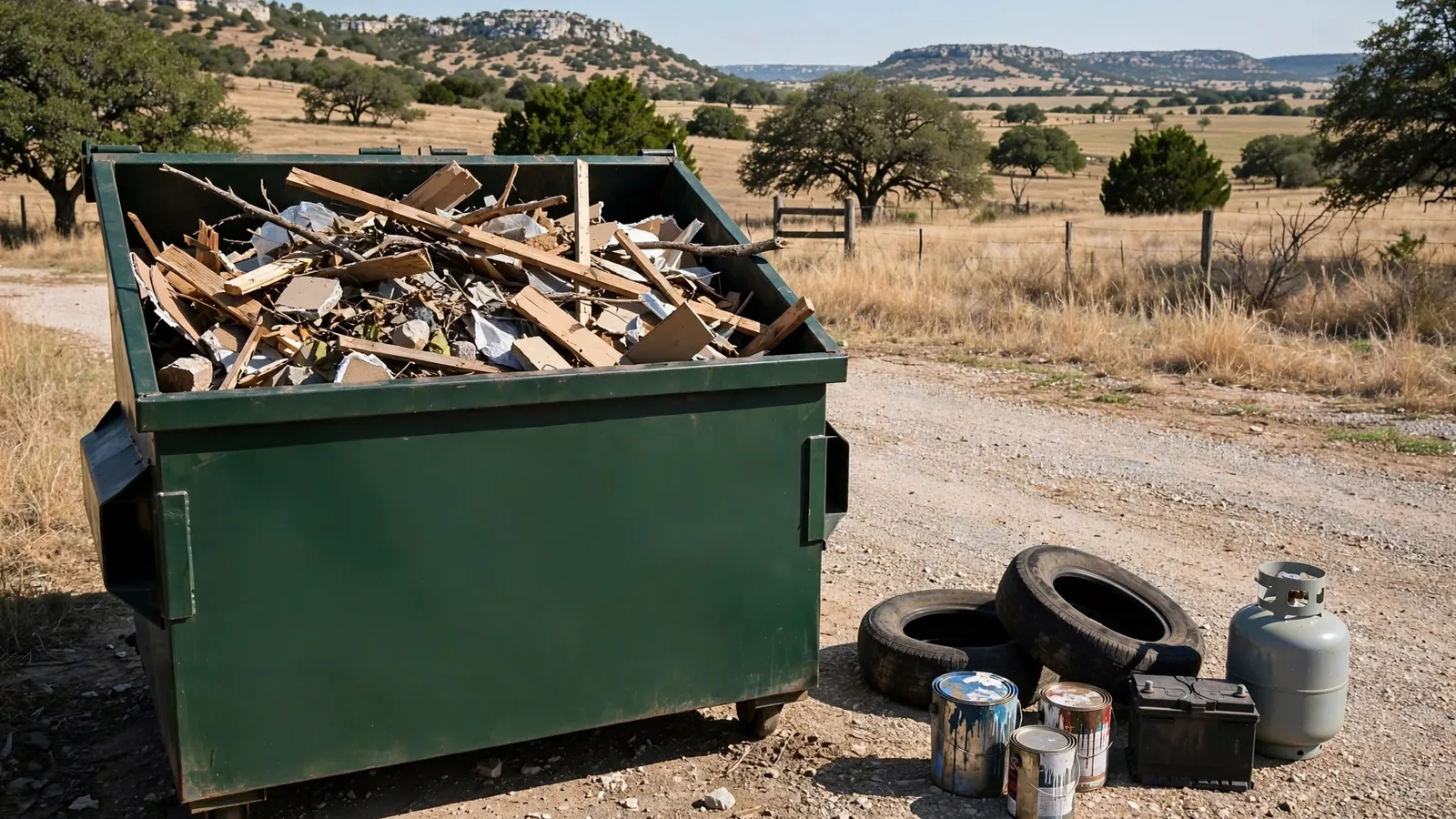
What Can (and Can’t) Go in Your New Braunfels Dumpster Rental
Renting a dumpster makes almost any cleanout or renovation faster, but not everything can legally go in one. Loading the wrong item can mean a fine, a rejected pickup, or an unsafe situation for the crew hauling it away. Here’s a straightforward, New Braunfels-specific guide to what’s fine to toss and what needs a different disposal route.
Why It Matters
All waste hauled from a dumpster rental is handled under Texas Commission on Environmental Quality (TCEQ) rules for municipal solid waste. Landfills won’t accept certain hazardous or regulated materials, which means a rental company can’t legally haul them either. Mixing in a banned item can hold up your entire pickup, and in some cases result in added fees to remove and properly dispose of it separately.
What You Can Throw in a Dumpster Rental
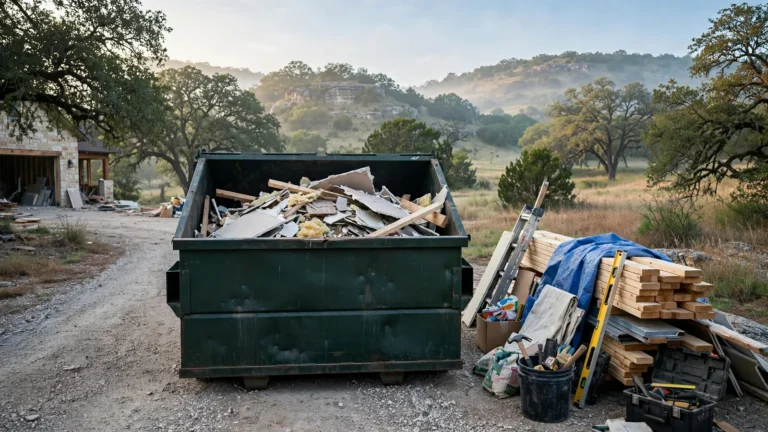
Most household and construction debris is fair game:
- Furniture, mattresses, and household junk
- Drywall, flooring, and carpet
- Roofing shingles (weight limits may apply)
- Wood, lumber, and framing debris
- Yard waste, branches, and landscaping debris
- Non-hazardous general construction debris
- Cardboard, packaging, and general trash
What You Can’t Throw in a Dumpster Rental
These items are restricted under Texas waste disposal rules and need a separate disposal path:
- Tires
- Car and household batteries
- Paint, solvents, and household chemicals
- Appliances containing Freon (refrigerators, some AC units)
- Propane tanks and other pressurized containers
- Asbestos-containing materials
- Medical or biohazard waste
Comal County offers household hazardous waste drop-off options for many of these items. If you’re not sure where something belongs, ask us before you load it — it’s a quick call and saves a headache at pickup.
Gray-Area Items Worth a Quick Call
Large appliances without Freon, dirt and concrete beyond a certain volume, and electronics can usually go in, but they may affect weight limits or require a specific container size. Concrete and brick, in particular, weigh far more than general debris per cubic yard, so a load that looks small can still hit a weight cap fast. We’ll flag any of this when you book so your price stays accurate at pickup.
Heavy Materials: Concrete, Dirt, and Rock
Concrete, brick, dirt, and rock are allowed in most dumpsters, but they come with a catch: weight. These materials get heavy fast, and a dumpster loaded to the top with them can go over the weight allowance or become unsafe to haul. If your project is mostly heavy debris, ask for a smaller dumpster and keep it a clean load, with only the heavy material and no trash or wood mixed in. Clean loads are easier to dispose of and can often be recycled. Mixed in with general debris, the same material can push you into overage charges.
What Happens If a Restricted Item Ends Up in the Dumpster
Drivers and landfill staff do check loads. If something on the restricted list shows up, the item may be pulled out and left behind, you may be charged a handling fee, or the dumpster may not be picked up until the item is removed. None of that is fun when you’re trying to wrap up a project.
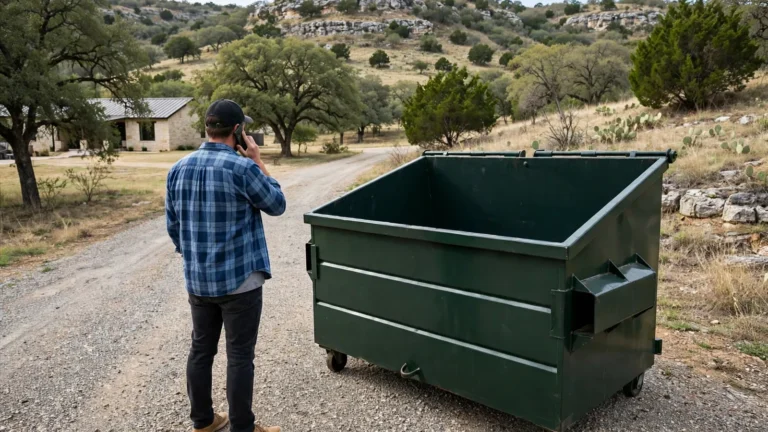
The easiest fix is to keep a separate pile for anything you’re not sure about and call before you toss it. A two-minute question costs less than a surprise fee.
Quick Guide by Project
- Kitchen or bath remodel: cabinets, countertops, drywall, tile, and flooring are fine. Leftover paint, adhesives, and solvents are not.
- Roof replacement: shingles, felt, and flashing are fine. Watch the weight on multi-layer tear-offs.
- Garage or estate cleanout: furniture, boxes, and household junk are fine. Old paint, chemicals, propane tanks, and batteries need to go elsewhere.
- Yard cleanup: branches, brush, and landscaping debris are fine. Keep dirt and rock in a separate, smaller container.
Tips for Loading Your Dumpster Efficiently
- Break down furniture and boxes flat to save space
- Load heavy items first, lighter debris on top
- Keep the load level with the top of the container — nothing should stick out above the rim
- Separate anything you’re unsure about instead of guessing
Still not sure what size or what’s allowed for your specific project? Check out our roll-off dumpster rental page for size guidance, or give us a call — we size projects and answer disposal questions over the phone every day, free of charge.
What Happens to the Cost If You Load a Restricted Item?
Mixing in a banned item can hold up your entire pickup, and in some cases result in added fees to remove and properly dispose of it separately. If something on the restricted list shows up, the item may be pulled out and left behind, you may be charged a handling fee, or the dumpster may not be picked up until the item is removed. Heavy loads can also push you into overage charges of $60–$100 per ton. A standard 7-day rental costs $280–$750. The provider confirms the price for your job when you call. See our dumpster rental prices for the ranges we list.
How Long Do You Have to Sort It Out?
A standard rental lasts 7 days. That gives you time to keep a separate pile for anything you’re not sure about and call before you toss it. If you need more time, ask the provider about extra days. Extra days are typically $15–$25 per day. The provider confirms the exact details when you book. You can read more about how long you can keep a dumpster before you load it. A garage cleanout is a good example: furniture, boxes, and household junk are fine, while old paint, chemicals, propane tanks, and batteries need to go elsewhere.
What items can never go in a dumpster?
Paint, chemicals, tires, batteries, asbestos materials, propane tanks, appliances with refrigerant, and medical or hazardous waste cannot go in a dumpster. These items are restricted under Texas waste disposal rules and need a separate disposal path.
Can I put paint in a dumpster?
No. Paint, solvents, and household chemicals are restricted under Texas waste disposal rules. Comal County offers household hazardous waste drop-off options for many of these items.
Can I put a refrigerator in a dumpster?
Appliances containing Freon, such as refrigerators and some AC units, cannot go in a dumpster. Large appliances without Freon can usually go in, but they may affect weight limits or require a specific container size.
What happens if a restricted item ends up in my dumpster?
Drivers and landfill staff do check loads. If something on the restricted list shows up, the item may be pulled out and left behind, you may be charged a handling fee, or the dumpster may not be picked up until the item is removed.
Can I put concrete or dirt in a dumpster?
Yes. Concrete, brick, dirt, and rock are allowed in most dumpsters, but they come with a catch: weight. If your project is mostly heavy debris, ask for a smaller dumpster and keep it a clean load.
Have a Question About What You Can Load?
Call (830) 420-5236 — we’ll walk you through it before you book.