Bagged Trash vs. Roll-Off: When Contractors Should Switch
On a small remodel, bagging trash and hauling it off at the end of the day works fine. On a bigger job it quietly gets expensive: crews stop to bag, someone makes dump runs, and debris piles up between trips. This guide is for New Braunfels contractors and project managers deciding when to drop the bagged-trash line item and put a roll-off on site, and how to handle jobsite recycling when the owner or GC asks for it.
The Short Answer
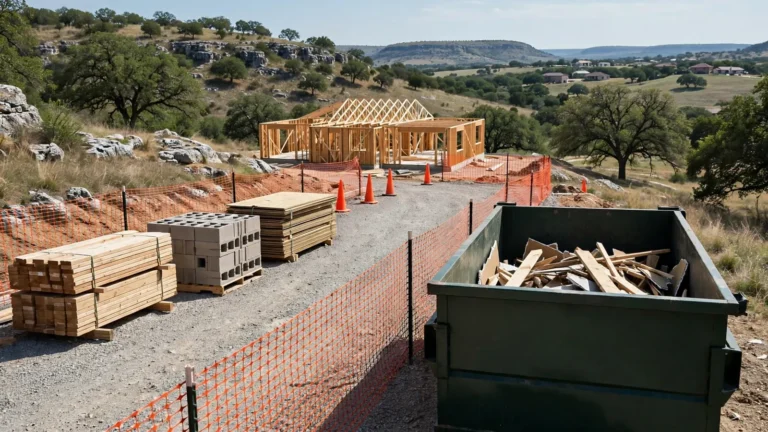
Switch to a roll-off once debris regularly fills more than one pickup load a week, or once three or more trades are working on site at the same time. At that point, the labor spent bagging and hauling usually costs more than the container. Most jobs at that stage start with a 20 or 30-yard and move to a 40-yard, or scheduled swaps, as framing and drywall waste ramps up.
Bagged Trash vs. Roll-Off: A Side-by-Side
| Bagged trash line item | On-site roll-off | |
|---|---|---|
| Best for | Punch lists, small remodels, one or two trades | Remodels with several trades, additions, new builds |
| Hidden cost | Crew time to bag, load and drive to the dump | Overweight charges if heavy debris goes in |
| Site appearance | Bags and piles between runs | One container, debris off the ground |
| Heavy debris | Hard to bag concrete, tile or shingles | Handles it, within the weight allowance |
| How you budget it | Hard to predict; depends on trips | Flat rate per haul, plus any overage |
A Simple Rule of Thumb for Your Bid
When you are writing the RFQ or bid, run the numbers both ways:
- Bagged: estimate hours per week your crew spends bagging and hauling, times the labor rate, plus fuel and landfill fees for each trip.
- Roll-off: the flat rate for the container times the number of hauls you expect, plus a cushion for overage if the job has heavy debris.
- Switch point: when the bagged number passes the roll-off number, or when site cleanliness matters for inspections, switch. On most multi-trade jobs that happens early.
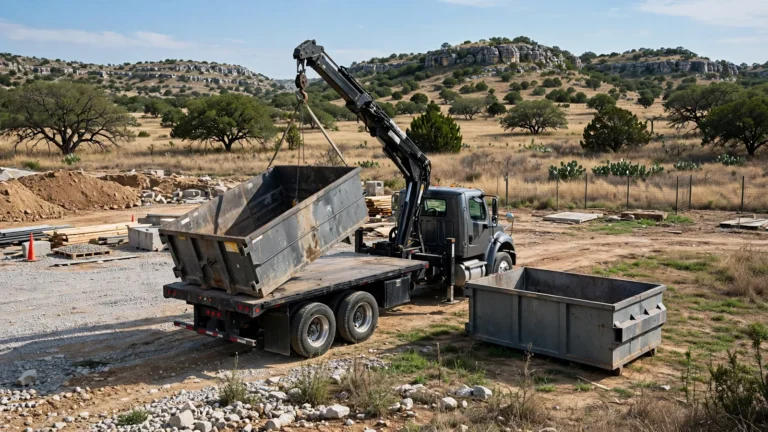
If the job will run for weeks, ask the provider about scheduled swaps so a full container is replaced with an empty one before the crew runs out of room. Here is how multiple dumpster swaps work on an active job site.
Picking the Container Size
- 20-yard: interior remodels, roof tear-offs, small additions.
- 30-yard: larger renovations and gut jobs.
- 40-yard: new construction with lots of bulky, lightweight framing and packaging waste.
- Concrete, brick or dirt: a 10-yard, filled carefully. These get heavy fast, so read about weight limits for heavy debris.
Still deciding? Compare every option in the dumpster size guide.
Jobsite Recycling in New Braunfels
More owners and GCs now ask for construction waste to be sorted and recycled. The practical way to do it is to keep clean material out of the mixed container:
- Separate the easy streams: clean concrete, scrap metal and cardboard are the materials most often recycled from job sites. Ask your provider whether they offer a separate container or a lower rate for clean loads.
- Ask about commercial recycling: several haulers on the City of New Braunfels permitted hauler list list commercial recycling among their services.
- Smaller amounts: the Comal County Recycle Center at 281 Resource Dr handles recycling for county residents. Call ahead at 830-643-3781 to ask what they take from contractors.
- Keep records: if the project needs waste diversion numbers, ask the provider for weight tickets for each haul.
Permits and Site Rules
Inside New Braunfels city limits, only haulers with a City permit can drop a roll-off, and a container on the street or right-of-way may need a permit of its own. See our New Braunfels dumpster permit guide, and these tips on keeping your job site compliant. For general contractor service, see construction dumpster rental.
Contractor FAQ
When should a contractor switch from bagged trash to a roll-off dumpster?
When debris regularly fills more than one pickup load a week, or when three or more trades work on site at once. At that point bagging and dump runs usually cost more in labor than a container.
What size roll-off do most contractors start with?
A 20 or 30-yard for remodels and additions, and a 40-yard for new construction with bulky, lightweight debris.
Can construction debris be recycled in New Braunfels?
Yes, especially clean concrete, scrap metal and cardboard. Ask your provider about separate containers for clean loads, or check with the Comal County Recycle Center about smaller amounts.
Need a roll-off on your job site? Call (830) 420-5236 and we’ll connect you with a local provider that can handle swaps and scheduled hauls.